brand strategy · consumer psychology
The 12 brand archetypes, and how they play out in Asia
Every brand has a character. Customers feel it long before they can name it.
They feel it in how you greet them, what you promise, what you joke about and what you refuse to do. When that character is clear and consistent, choosing you feels easy. When it keeps shifting, customers hesitate, even if they cannot say why.
Brand archetypes give that character a name. This guide walks through all twelve, with one global and one Asian example each, and a note on how each archetype plays out with customers in Asia.
What brand archetypes are
The idea comes from the psychologist Carl Jung, who noticed the same characters appearing in stories across every culture: the hero, the caregiver, the rebel, the wise teacher. Branding borrowed the idea because people respond to these characters instinctively. We already know what to expect from a Hero or a Sage, so a brand that behaves like one is easier to trust.
An archetype is not a logo style or a slogan. It is the character underneath them, the thing that decides how your brand speaks, what it promises and what it would never do.
Why they work differently in Asia
Most archetype guides are written for Western markets. In Asia the twelve characters are the same, but the unwritten rules around them are different.
Customers here decide with feelings, and those feelings follow rules nobody writes down: face, kreng jai (เกรงใจ, the wish not to impose on or trouble others), in-group loyalty, respect for hierarchy, and a deep love of fun. The same archetype can win or lose depending on whether it plays by those rules. A Hero that brags can cost others face. An Outlaw that mocks authority can cross a line it cannot uncross. A Sage that lectures will not be argued with, it will simply be left.
So for each archetype below, look for the section called In Asia. It is where most brands get it wrong.
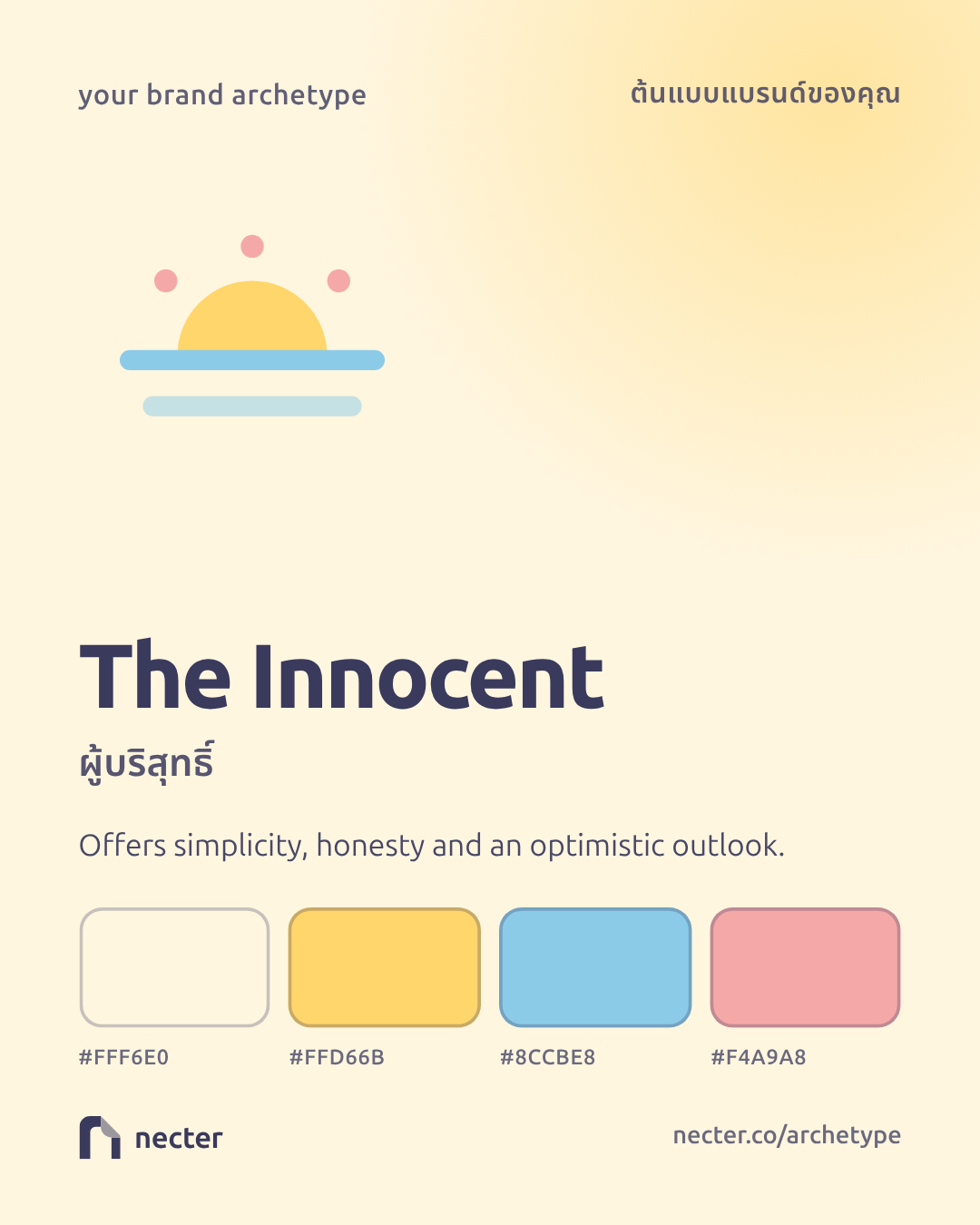
archetype 1 of 12
The Innocent ผู้บริสุทธิ์
Offers simplicity, honesty and an optimistic outlook.
- What it wants
- To be good, and to keep life simple and safe.
- Why customers choose it
- It makes them feel that nothing will go wrong. Choosing it feels clean and easy.
- How it sounds
- Light, honest, warm. "Simply good, every day."
In Asia
Purity carries real weight in Asia. In food, skincare and products for children, words like clean, natural and gentle signal safety before anything else. But customers here have seen many claims that sound too good to be true, so the Innocent has to show its proof quietly: ingredients, origins, plain facts. Simplicity without proof reads as naive.
Its long-running story is happiness, sharing and simple good moments.
Its name means 'no-brand quality goods'. Simplicity is the whole idea.
- Watch out for
- Sounding childish, or promising a perfection you cannot keep.
- Often found in
- Food and drink, skincare, baby care, home goods.
- Pairs well with
- Caregiver (simple and kind) or Everyman (simple and familiar).
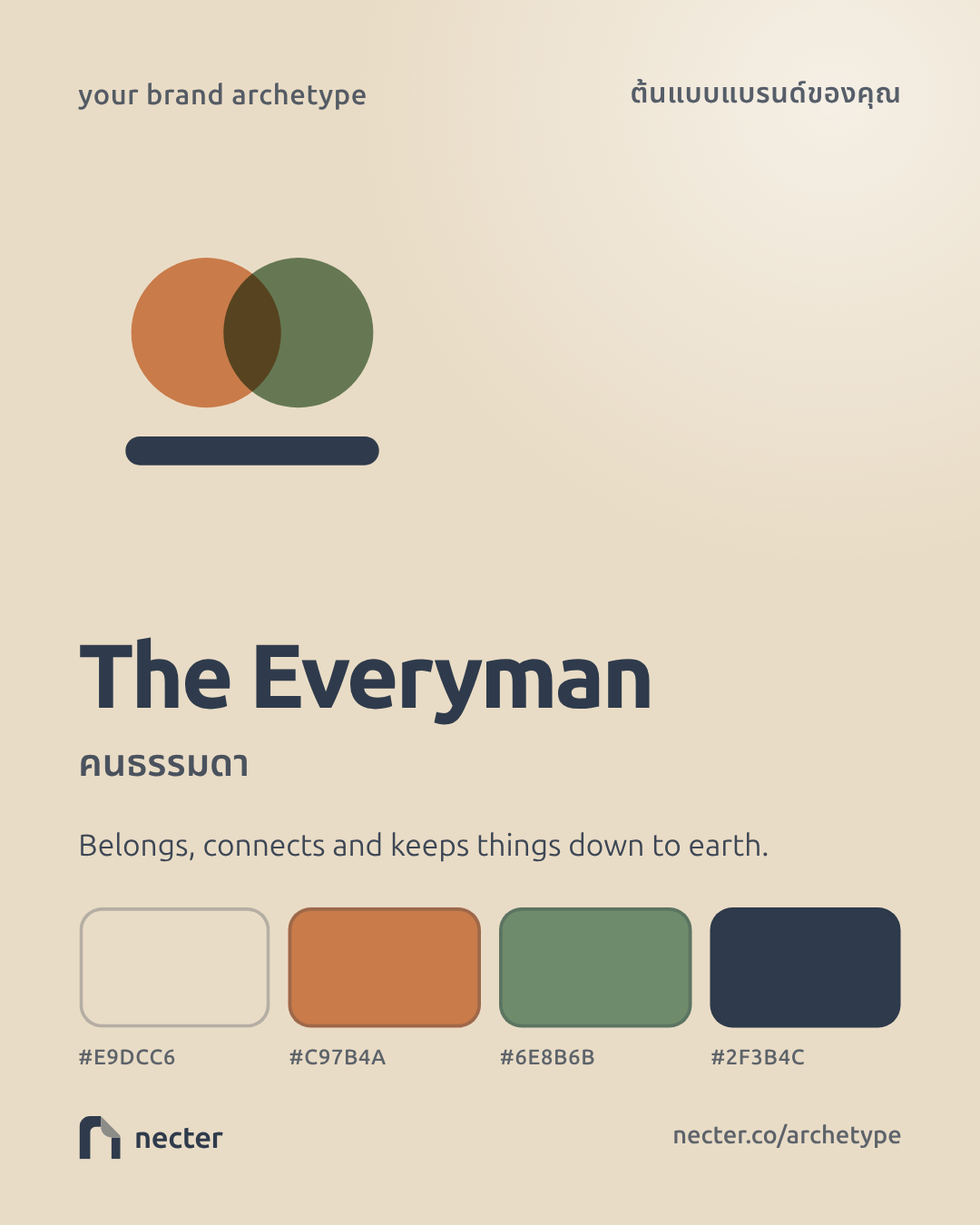
archetype 2 of 12
The Everyman คนธรรมดา
Belongs, connects and keeps things down to earth.
- What it wants
- To belong, and to make everyone feel they belong too.
- Why customers choose it
- It feels like one of us. No pretence, no judgement, no risk of looking foolish.
- How it sounds
- Friendly, plain, a little self-aware. "Good food, good people, every day."
In Asia
This may be the most natural archetype in Thailand. It fits kan-eng (กันเอง, being at ease with each other, no formality) and the strong pull of in-group loyalty: people stick with brands that feel like part of the family. Everyman brands here win on memories more than features. The risk is the price war. If the only reason to choose you is that you are cheaper, someone will always be cheaper.
Good design made affordable for many people, not a few.
Its 40th anniversary line, 'Where every memory is still warm', sells shared family memories rather than discounts.
- Watch out for
- Becoming so ordinary that nobody remembers you, or competing on price alone.
- Often found in
- Restaurants, retail, everyday services, convenience brands.
- Pairs well with
- Jester (everyday and fun) or Caregiver (everyday and caring).
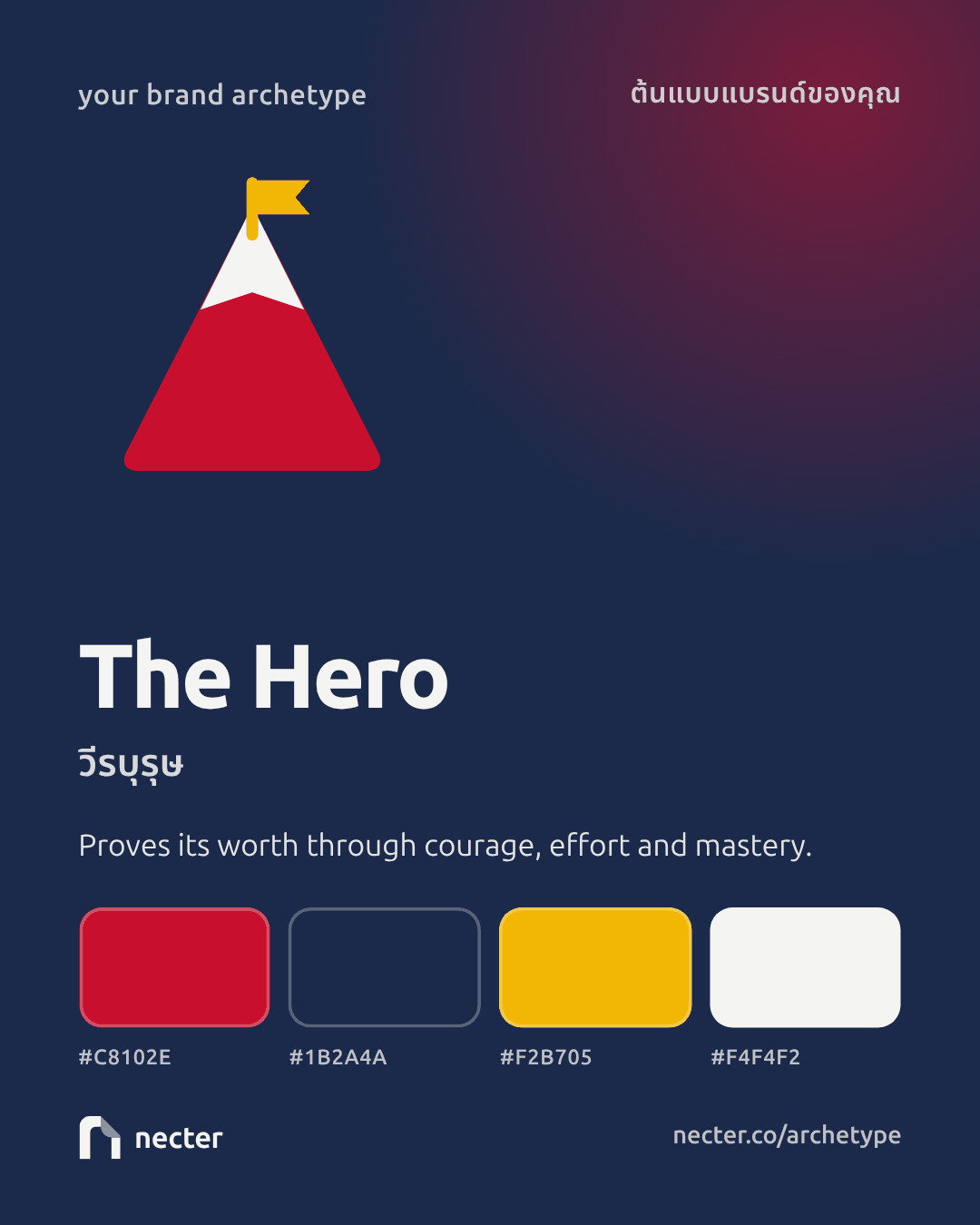
archetype 3 of 12
The Hero วีรบุรุษ
Proves its worth through courage, effort and mastery.
- What it wants
- To prove its worth by overcoming something hard.
- Why customers choose it
- It makes them feel stronger. Choosing it says: I do not give up.
- How it sounds
- Direct, energetic, determined. "Push through."
In Asia
The Western Hero is often a lone winner. In much of Asia, the admired hero is the one who endures, ot thon (อดทน), and carries others with them: the worker who keeps going for the family, the team that refuses to quit. Bragging is risky, because winning loudly can cost others face. The Asian Hero celebrates the customer's effort, not its own trophies.
'Just Do It' turns every customer into the hero of their own effort.
Its campaign 'The Power of Real Men' urged hard-working people to 'unleash the force of a bull within you'.
- Watch out for
- Arrogance, or making customers feel weak for needing help.
- Often found in
- Sports, energy and fitness, tools, training, insurance.
- Pairs well with
- Caregiver (strength used for others) or Ruler (strength with order).
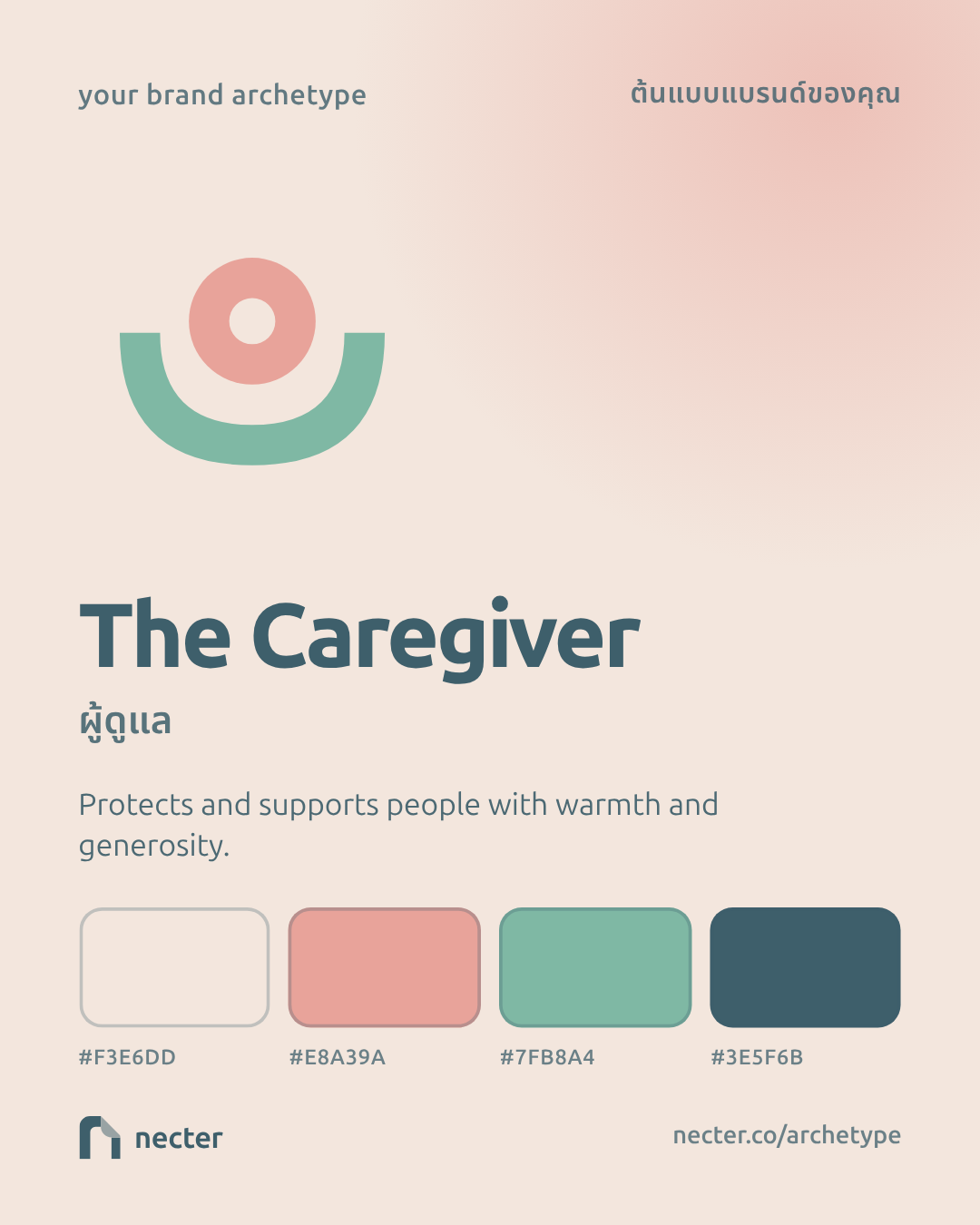
archetype 4 of 12
The Caregiver ผู้ดูแล
Protects and supports people with warmth and generosity.
- What it wants
- To protect and care for others.
- Why customers choose it
- It makes them feel looked after. Choosing it feels safe.
- How it sounds
- Warm, reassuring, patient. "We've got you."
In Asia
In Thailand, nam jai (น้ำใจ, generosity of spirit) and gracious hospitality are expected, not extra. So care alone does not stand out. The Caregivers that win here anticipate needs before customers ask, and make sure customers never feel they are a burden. That last part matters in a kreng jai culture: people would rather not ask for help at all than feel they are troubling you.
Built on the gentle, protective care of a parent.
'Smooth as Silk' turned Thai hospitality and grace into the promise of the journey.
- Watch out for
- Smothering customers, over-promising, or giving so much that you are taken for granted.
- Often found in
- Healthcare, hospitality, family products, education, insurance.
- Pairs well with
- Innocent (gentle care) or Sage (care with expertise).
archetype 5 of 12
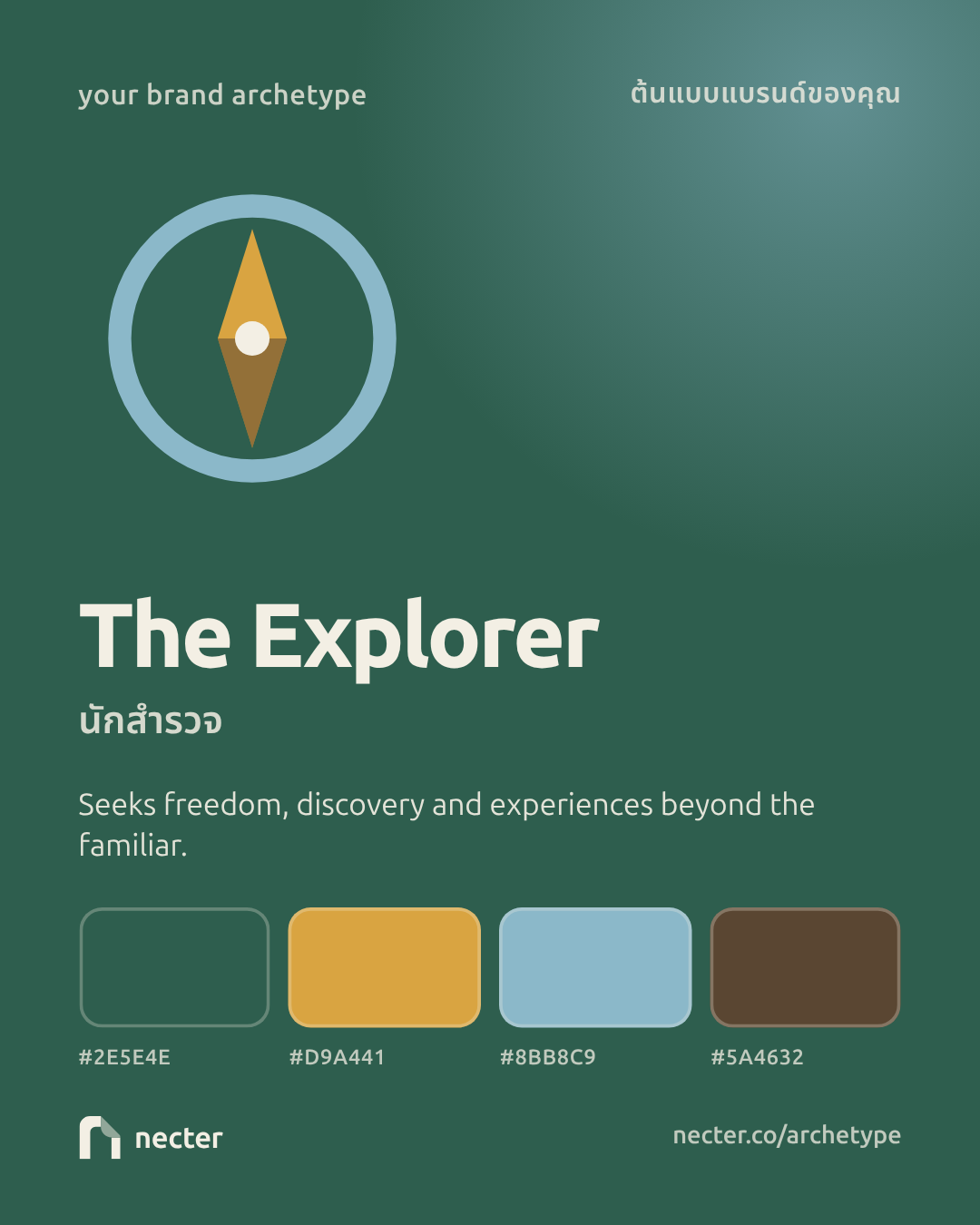
The Explorer นักสำรวจ
Seeks freedom, discovery and experiences beyond the familiar.
- What it wants
- Freedom, and to find out what is out there.
- Why customers choose it
- It opens the world up. Choosing it feels like a step towards a bigger life.
- How it sounds
- Curious, open, adventurous. "Go see for yourself."
In Asia
Asia's growing middle class is travelling and trying new things like never before, so the Explorer has a big audience. But exploring here often happens with friends and family, and safety still matters. The Asian Explorer sells freedom with a safety net: new places, new tastes, without the fear of getting it wrong.
'Never Stop Exploring' is its promise and its name.
Its tagline 'See the world for less' frames travel as self-discovery made affordable.
- Watch out for
- Feeling unreliable, or leaving loyal customers behind in the chase for the new.
- Often found in
- Travel, outdoor gear, cars, food discovery, education abroad.
- Pairs well with
- Hero (adventure with grit) or Everyman (adventure for everyone).
archetype 6 of 12
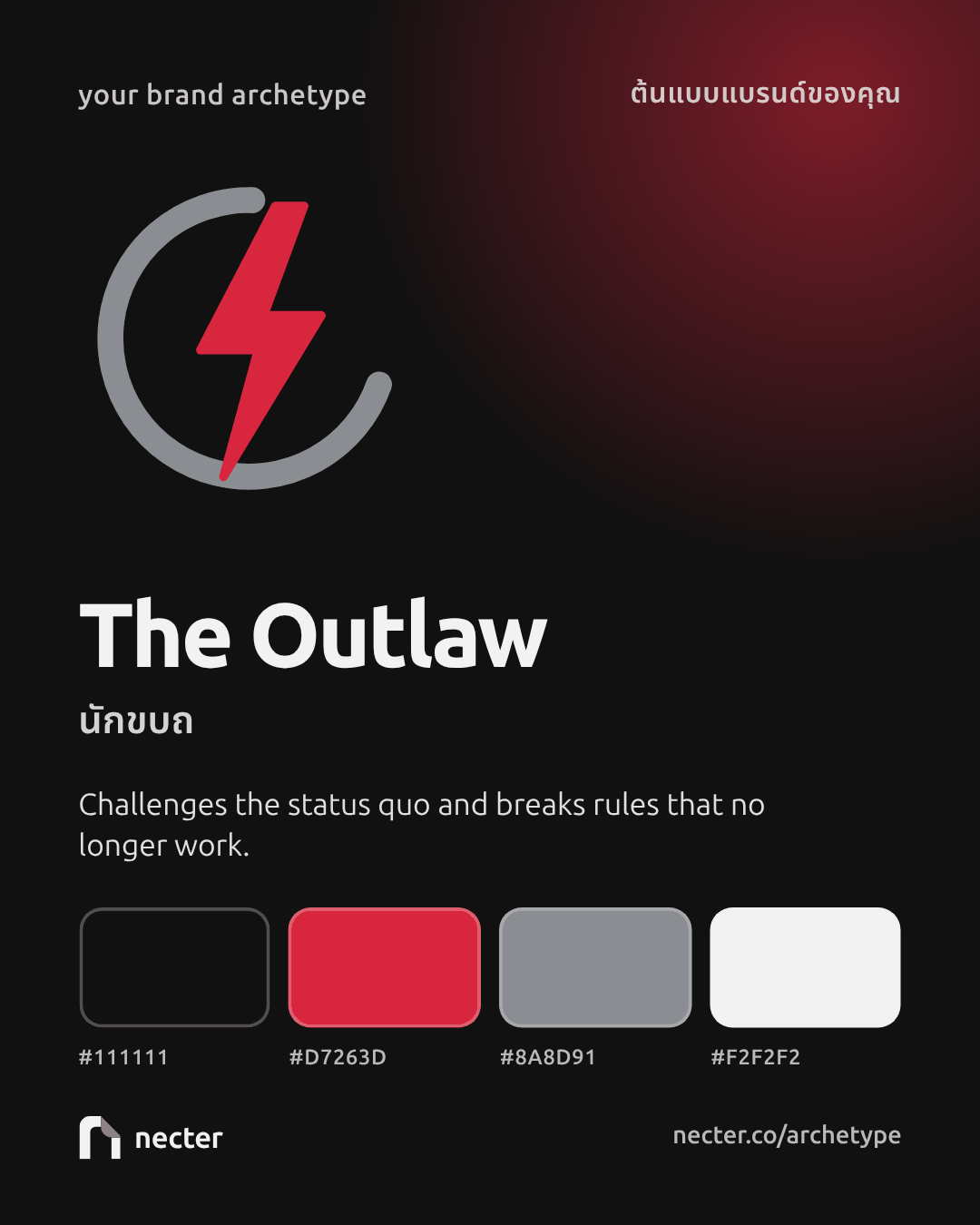
The Outlaw นักขบถ
Challenges the status quo and breaks rules that no longer work.
- What it wants
- To break what is not working, and to be free of tired rules.
- Why customers choose it
- It says what they were thinking. Choosing it feels like standing apart.
- How it sounds
- Bold, edgy, unapologetic. "Why does it have to be this way?"
In Asia
Rebellion is risky in cultures that value harmony and face. The Asian Outlaws that succeed rebel against category conventions, not against people or institutions. They break the boring rules of their market, the copycat products and the same old look, and leave the deeper lines alone.
Freedom from rules, built on the open road.
It goes after gaps the big brands ignore, rejects copycat trends, and made its name with a black blush.
- Watch out for
- Offending for attention, or crossing cultural lines you cannot uncross.
- Often found in
- Fashion, beauty, drinks, music, challenger brands in sleepy categories.
- Pairs well with
- Creator (rebellion with ideas) or Jester (rebellion with a wink).
archetype 7 of 12
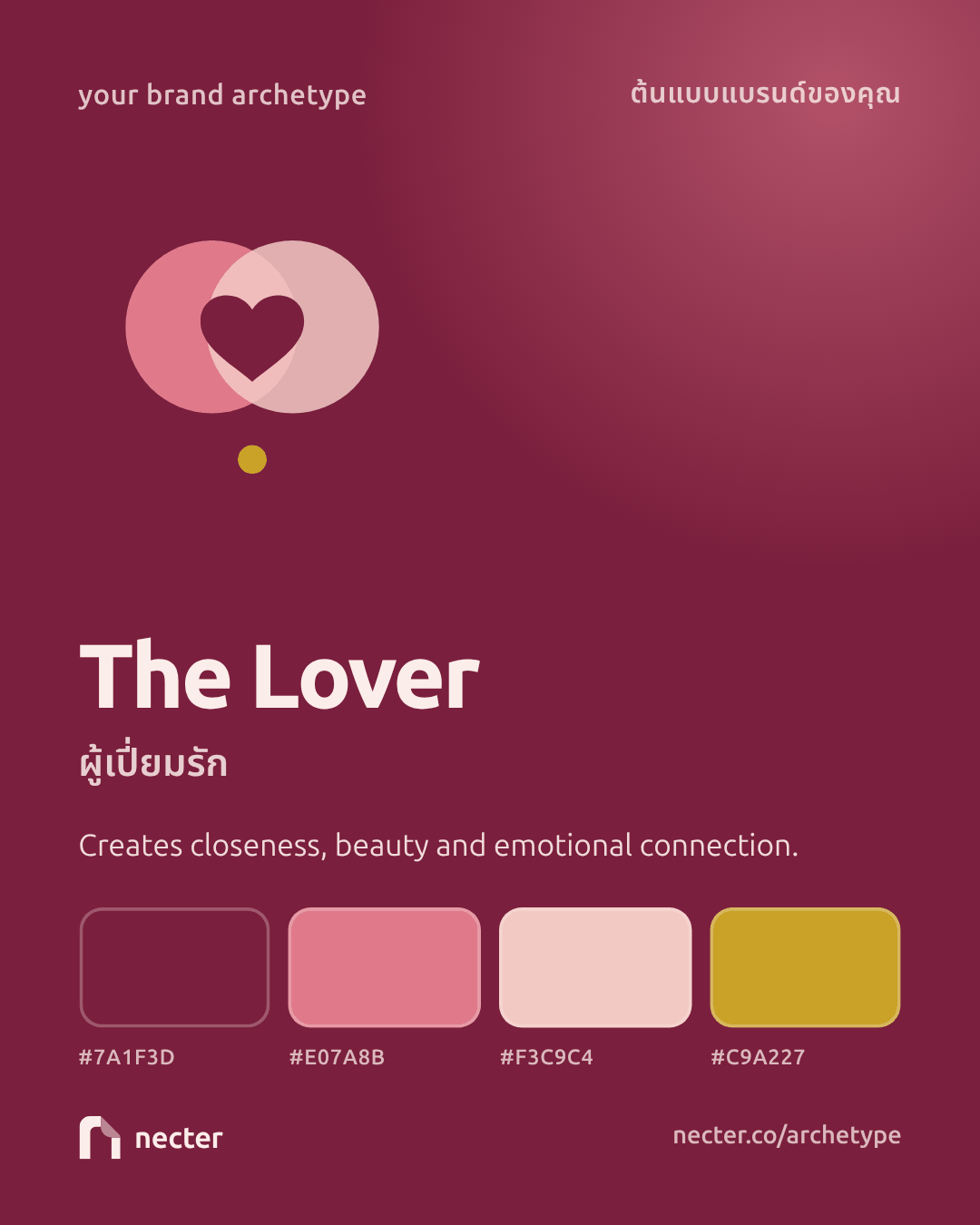
The Lover ผู้เปี่ยมรัก
Creates closeness, beauty and emotional connection.
- What it wants
- Closeness, beauty and pleasure for the senses.
- Why customers choose it
- It makes them feel special and desired. Choosing it is a treat.
- How it sounds
- Sensual, intimate, refined. "Made to be savoured."
In Asia
In Asia the Lover is usually expressed through refinement, ritual and the senses rather than open sensuality: scent, texture, craft, the pleasure of slowing down. Beauty and emotional connection are the doorway, and restraint often makes the brand more desirable, not less.
Beauty, desire and timeless elegance.
Its promise is a 'Sanctuary for the Senses', built on romance, intimacy and rejuvenation.
- Watch out for
- Feeling shallow, or so exclusive that customers feel they do not belong.
- Often found in
- Beauty, fragrance, fashion, hospitality, fine food.
- Pairs well with
- Creator (beauty with craft) or Caregiver (beauty with care).
archetype 8 of 12
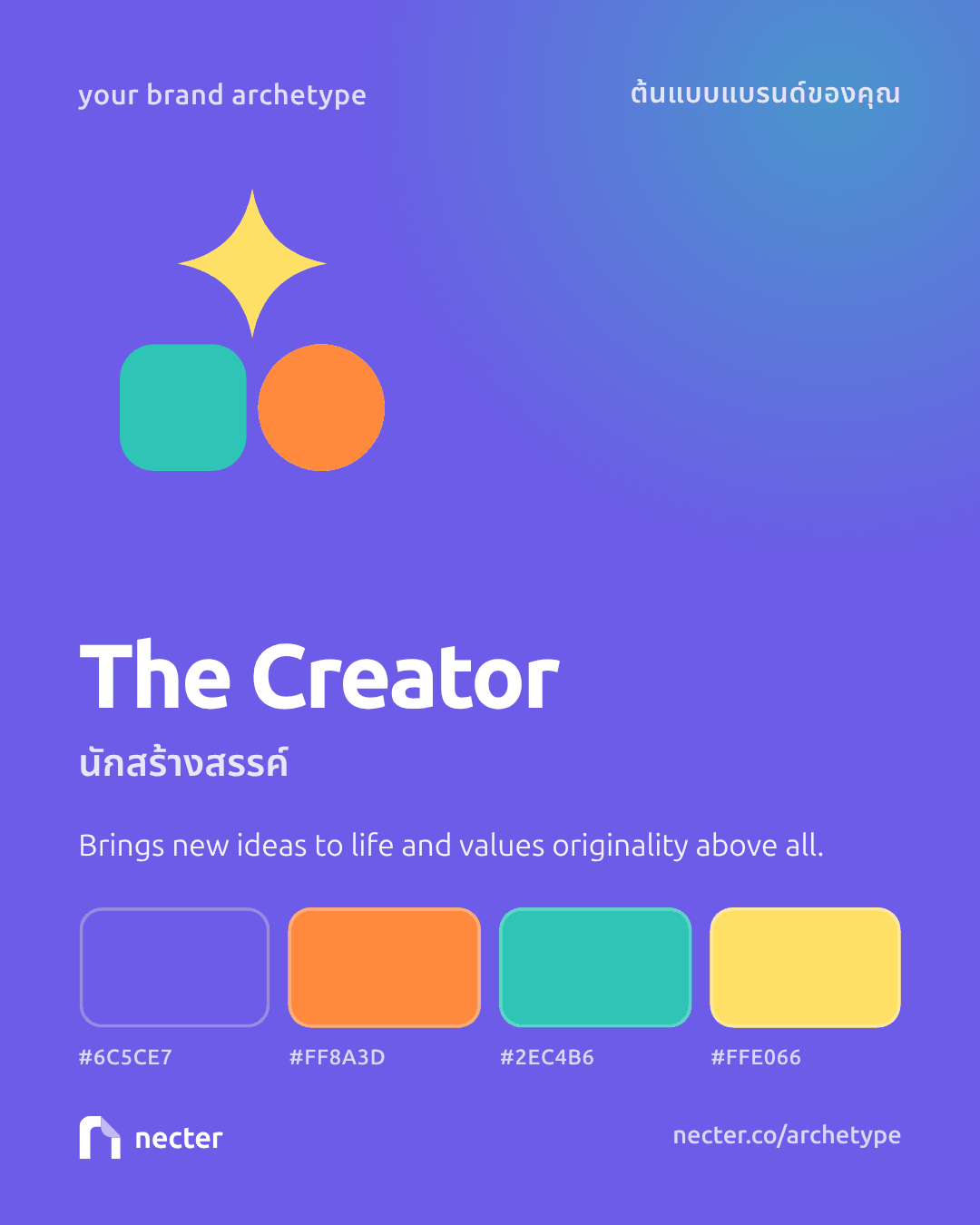
The Creator นักสร้างสรรค์
Brings new ideas to life and values originality above all.
- What it wants
- To make something new that lasts.
- Why customers choose it
- It sparks their own creativity. Choosing it says: I have taste.
- How it sounds
- Inventive, expressive, detailed. "Imagine if..."
In Asia
Asia has deep craft traditions, and customers here respect skill. The Creators that travel best are not the most shocking, but the ones that put a surprising twist on something familiar. Respecting the original while adding something new is what makes the idea feel both safe and exciting.
Building blocks for anything you can imagine.
Grew for four decades on one idea: 'Basic with a Twist'.
- Watch out for
- Novelty with no use, or perfectionism that never ships.
- Often found in
- Design, fashion, food concepts, technology, the arts.
- Pairs well with
- Magician (ideas that transform) or Sage (ideas with depth).
archetype 9 of 12
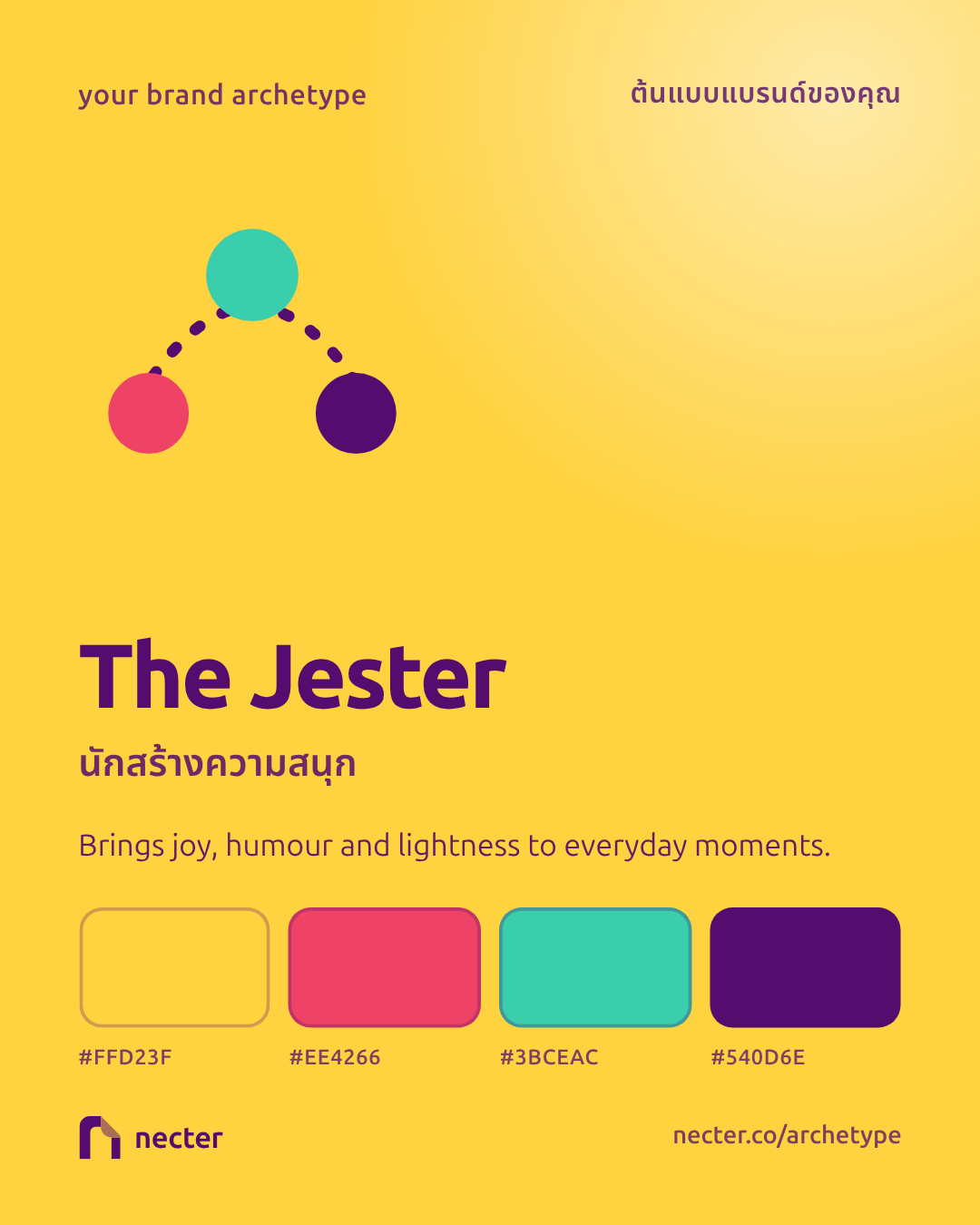
The Jester นักสร้างความสนุก
Brings joy, humour and lightness to everyday moments.
- What it wants
- To have fun and to lighten the mood.
- Why customers choose it
- It makes them laugh and relax. Choosing it feels good.
- How it sounds
- Playful, cheeky, quick. "Life's too short. Have fun."
In Asia
Fun, sanuk (สนุก), sits at the heart of Thai life, and humour is the signature of Thai advertising. That makes the Jester a natural fit here, but the rule is clear: laugh with people, never at them. A joke that makes someone lose face does far more damage than a joke that falls flat.
Characters with personalities, and a running joke on every pack.
Famous at home for weird, self-mocking ads that play with memes and pop culture.
- Watch out for
- Humour at someone's expense, or never being taken seriously.
- Often found in
- Drinks, snacks, entertainment, apps, youth brands.
- Pairs well with
- Everyman (fun for everyone) or Outlaw (fun with an edge).
archetype 10 of 12
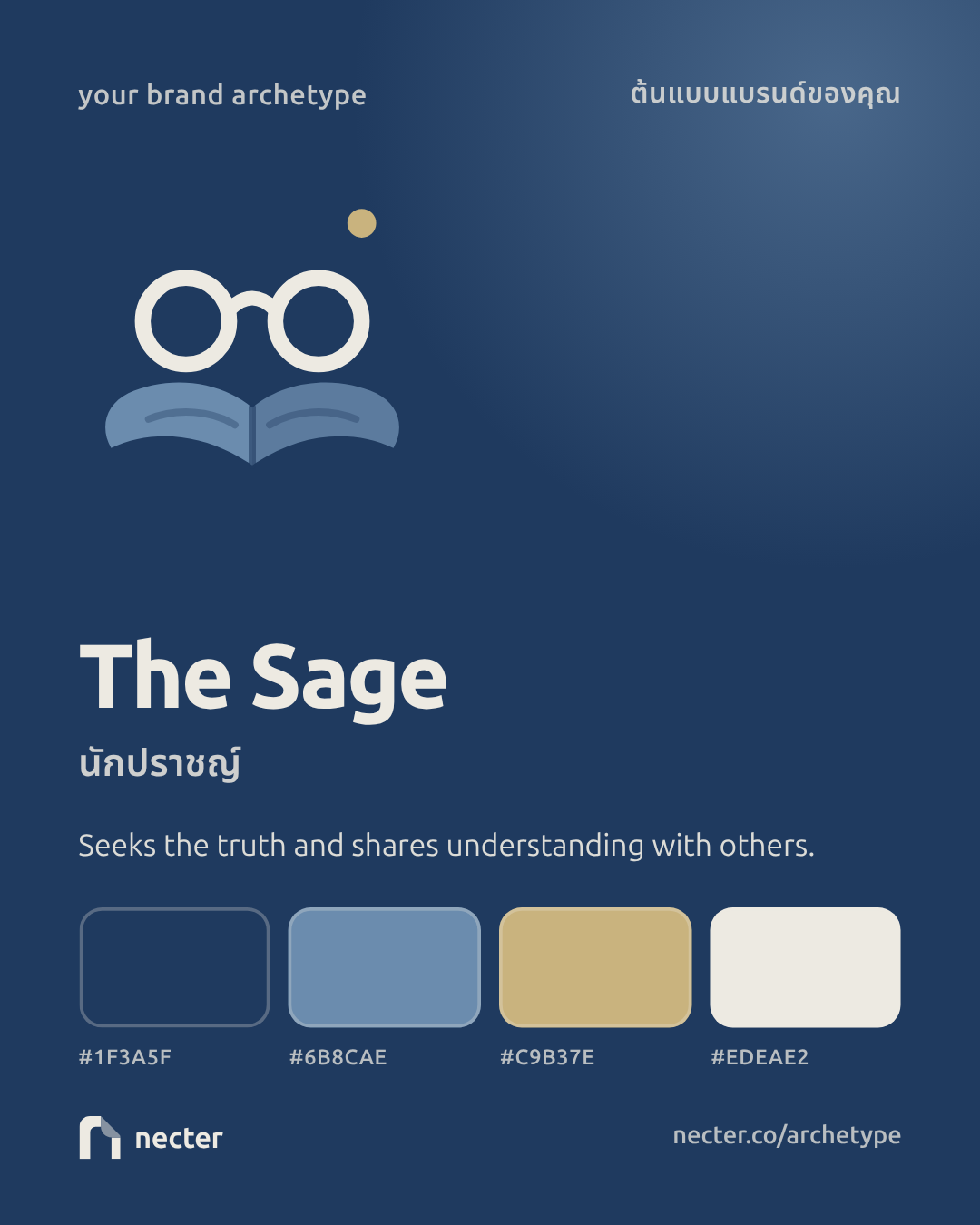
The Sage นักปราชญ์
Seeks the truth and shares understanding with others.
- What it wants
- To understand, and to help others understand.
- Why customers choose it
- They feel smarter, and safer, making the decision.
- How it sounds
- Clear, calm, evidence-led. "Here's what we found, and what it means for you."
In Asia
Respect for teachers runs deep. Thailand even has a ceremony for it, wai khru (ไหว้ครู), so Sage brands start with natural authority. But in a kreng jai culture, lecturing backfires. Customers will not argue, they will simply leave. The Sages that win explain gently, never make anyone feel slow, and let customers save face when they did not know something.
Its mission is to organise the world's information and make it useful.
A self-learning method that helps students understand step by step, at their own pace.
- Watch out for
- Turning cold or know-it-all. Too much information, too little warmth.
- Often found in
- Consulting, education, research-led health and finance.
- Pairs well with
- Caregiver (wisdom with warmth) or Creator (wisdom with ideas).
archetype 11 of 12
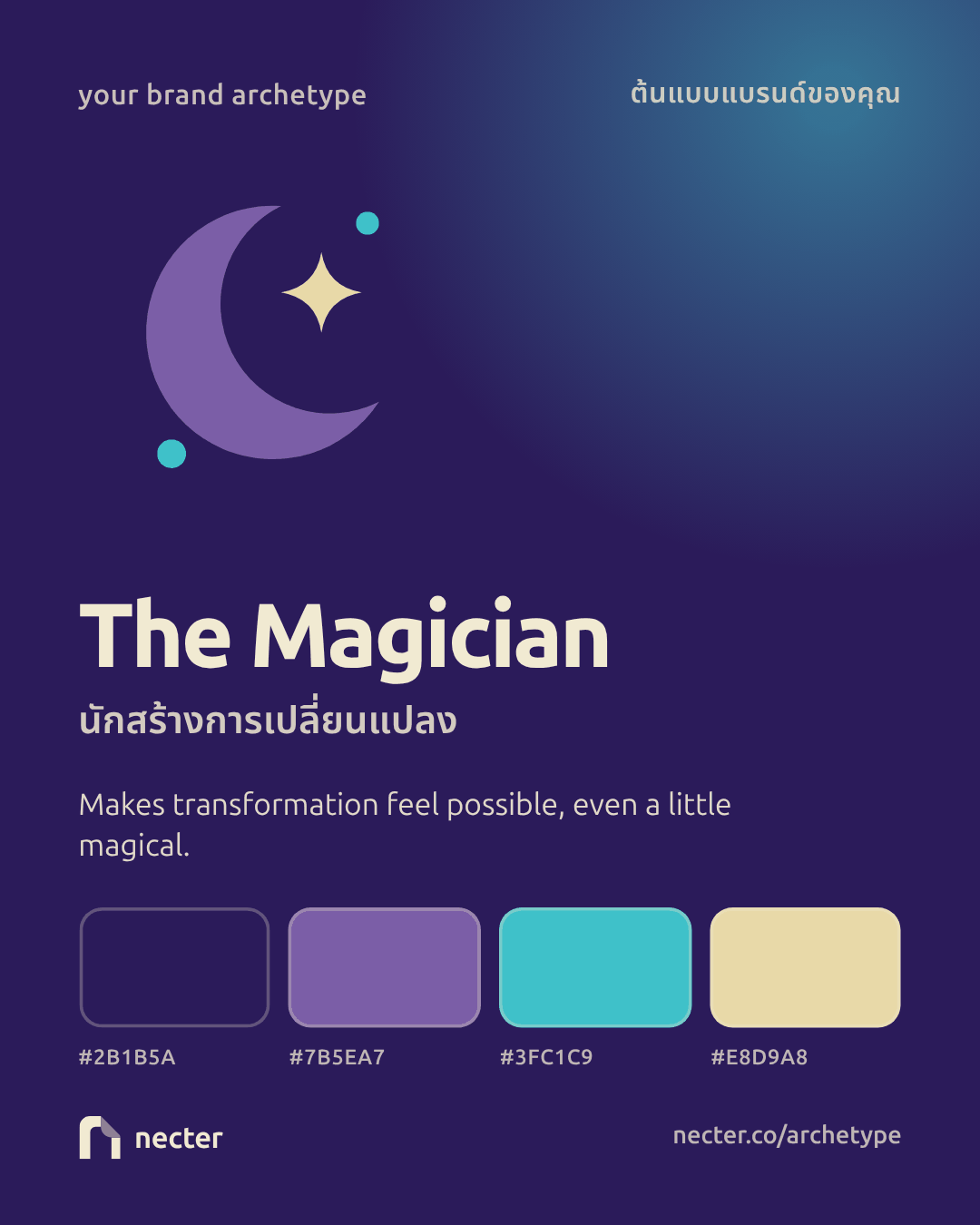
The Magician นักสร้างการเปลี่ยนแปลง
Makes transformation feel possible, even a little magical.
- What it wants
- To make the impossible possible, and to transform.
- Why customers choose it
- It promises change they can feel. Choosing it feels like the first step to becoming someone new.
- How it sounds
- Visionary, intriguing, confident. "Watch what happens."
In Asia
Belief in luck, fortune and transformation is alive and growing across Asia, from amulets to auspicious dates to the popular saai mu (สายมู) culture in Thailand. Customers here are open to a little magic. That openness is also the trap: in beauty and health especially, a promise of transformation has to be backed by results, or it turns into distrust.
Turning stories into wonder you can step inside.
Its Pitera essence is known as 'miracle water', credited with millions of skin transformations.
- Watch out for
- Over-promising, or claims that cannot be proven.
- Often found in
- Beauty, wellness, technology, entertainment, transformation services.
- Pairs well with
- Creator (vision with craft) or Sage (wonder with proof).
archetype 12 of 12
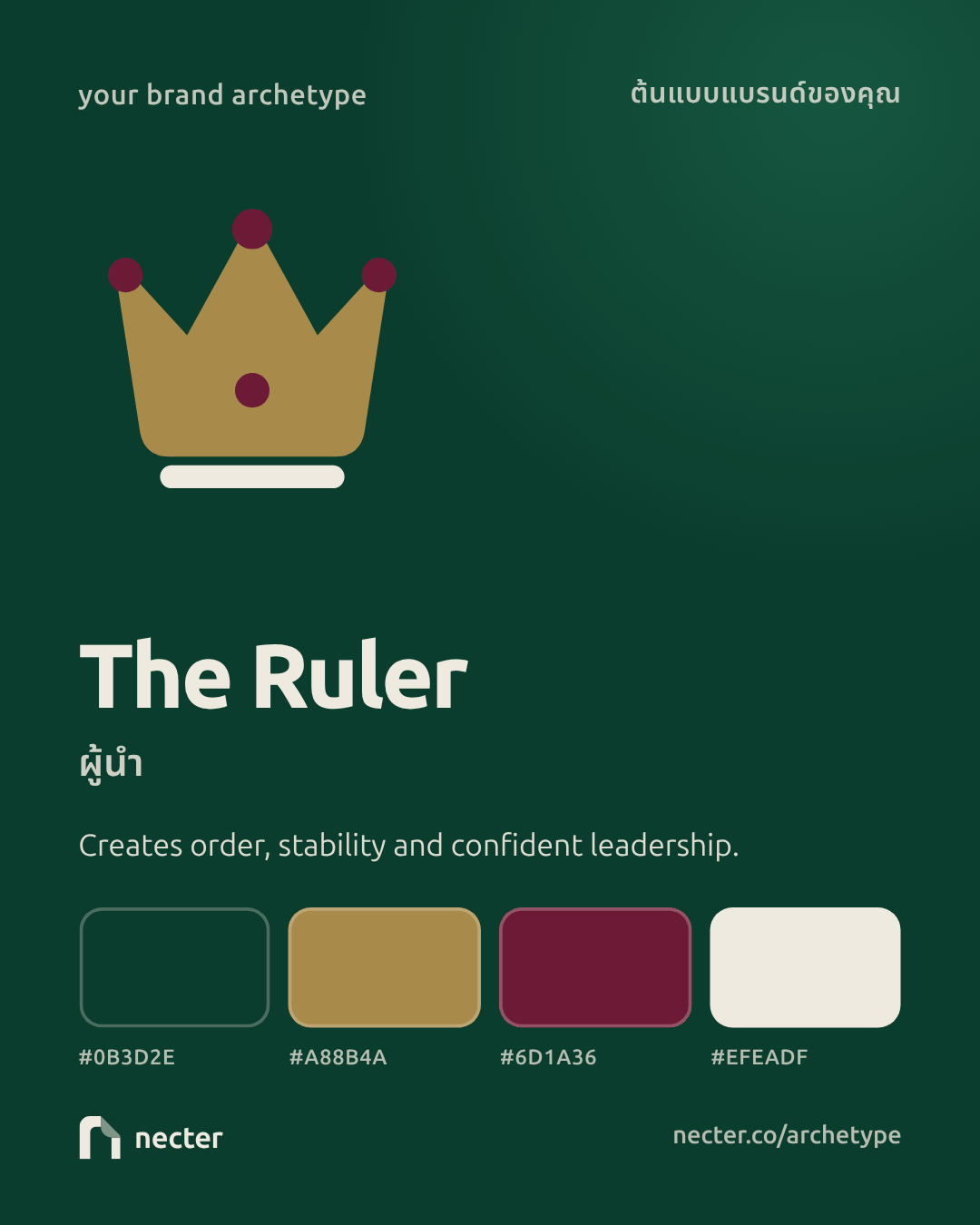
The Ruler ผู้นำ
Creates order, stability and confident leadership.
- What it wants
- Control, order and to set the standard.
- Why customers choose it
- It signals status and security. Choosing it says: I chose the best.
- How it sounds
- Assured, polished, measured. "The standard."
In Asia
Hierarchy and face shape buying decisions across Asia. A Ruler brand lets customers show status without saying a word, and it can carry national pride too. But Asian Rulers also have to stay gracious. Being cold or elitist turns respect into resentment.
A crown for its logo, and a byword for achievement.
Built and promoted as a national landmark and a symbol of Thai pride.
- Watch out for
- Coldness, arrogance, or refusing to change.
- Often found in
- Luxury, finance, property, premium cars, landmark destinations.
- Pairs well with
- Caregiver (authority with grace) or Hero (authority earned).
How to use your archetype
- Pick one primary archetype. It should be the one your customers would recognise without being told. It decides the big things: your promise, your tone, what you would never do.
- Add one supporting archetype. It adds depth. A Sage with a Caregiver side feels wise and warm. A Hero with a Jester side feels strong and fun.
- Make it show up everywhere. Your archetype has to appear in every touchpoint, from the first ad to the LINE reply to the receipt. Customers notice the gaps more than the highlights.
Three mistakes to avoid
- Choosing the archetype you wish you were. It has to be true to how you already behave, or customers will feel the mismatch.
- Mixing three or four. A brand that is a little of everything ends up feeling like nothing.
- Copying the Western version. The characters are universal. How they win in Asia is not.
A starting point, not the finish line
An archetype tells you who your brand is. It does not tell you where that character goes missing in your customer's journey: the ad that sounds like a different brand, the reply that breaks the mood, the checkout that forgets everything you promised. That is where customers hesitate, and where most of the work is.
Find yours. Then let's see where it shows up.
Start with the free Archetype Finder. If you want to know what it means for your business, a 15-minute call is free.
Brand examples reflect how these brands present themselves in their own campaigns and public interviews, read through the archetype lens. They are illustrations, not endorsements.